🍪 We use cookies
We use cookies to enhance your experience, analyze site traffic, and for marketing purposes. By clicking "Accept All", you consent to our use of cookies. Read our Privacy Policy


This is Part 1: Cervical Spine.
Designed to be watched, practiced, watched again and practiced some more, this course teaches fundamental skills for assessing the cervical, thoracic and lumbar spines in bite-sized chunks. Whether you are a student, new graduate or someone returning to practice who just wants to brush up on their assessments, this course will help you through.
After a review of the evidence surrounding spinal examination skills, these physical assessments are then demonstrated following no particular “school of thought”, using neutral language, in a flexible manner where there is no right or wrong way of doing things.
The aim is to develop safe, comfortable, individualized examination processes for all involved – the therapist and the patient - that consider the multidimensional nature of spinal pain throughout.
By the end of this series of videos, and with repeated practice of the procedures demonstrated, participants should be able to:
1. Perform fundamental physical examination procedures for the cervical, thoracic and lumbar spines in a manner that is safe, efficient and comfortable
2. Consider the evidence-based rationale and limitations of individual physical examination procedures
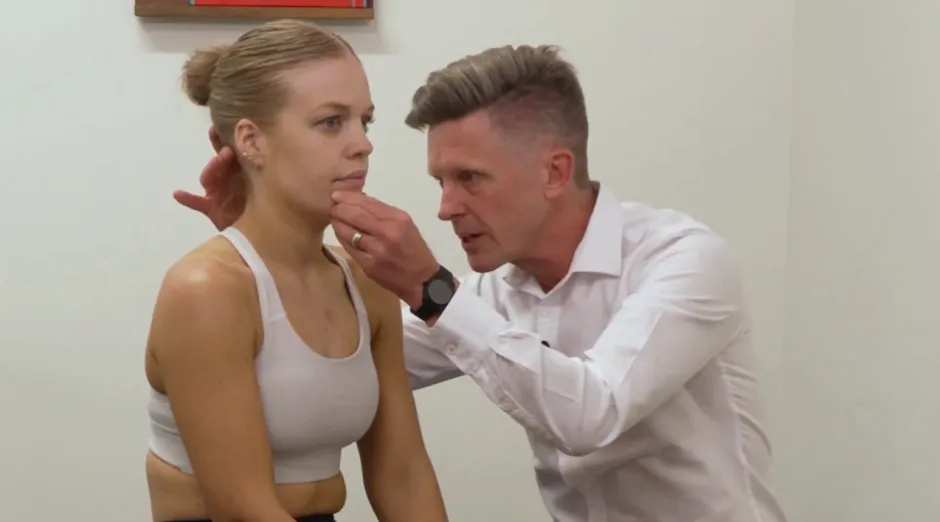
Learn a clear, practical approach to cervical spine examination, from movement testing and symptom provocation to neurological screening, neurodynamic tests, and the flexion-rotation test. Discover how to assess range, movement quality, pain response, and clinical patterns to guide sharper decision-making in practice.
Learn how to make spinal examination safer, more effective, and more comfortable by adapting your approach to each patient. Through clear good-and-bad examples, you’ll see how communication, positioning, and technique can strengthen trust, avoid leading responses, and improve assessment quality.
Build a safe, efficient, and patient-centered approach to spinal examination across the cervical, thoracic, and lumbar spine. Discover how to use look, move, and feel with confidence while understanding the evidence, limitations, and clinical reasoning behind each step.
This is Part 1: Cervical Spine.
Designed to be watched, practiced, watched again and practiced some more, this course teaches fundamental skills for assessing the cervical, thoracic and lumbar spines in bite-sized chunks. Whether you are a student, new graduate or someone returning to practice who just wants to brush up on their assessments, this course will help you through.
After a review of the evidence surrounding spinal examination skills, these physical assessments are then demonstrated following no particular “school of thought”, using neutral language, in a flexible manner where there is no right or wrong way of doing things.
The aim is to develop safe, comfortable, individualized examination processes for all involved – the therapist and the patient - that consider the multidimensional nature of spinal pain throughout.
By the end of this series of videos, and with repeated practice of the procedures demonstrated, participants should be able to:
1. Perform fundamental physical examination procedures for the cervical, thoracic and lumbar spines in a manner that is safe, efficient and comfortable
2. Consider the evidence-based rationale and limitations of individual physical examination procedures
We usually answer within a minute.
Ask anything about your membership, certificates or what is in the library.
No comments yet…